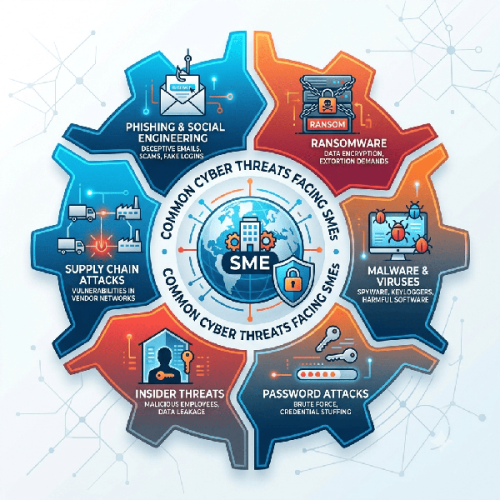
Small and Medium Enterprises (SMEs) are frequently targeted by cybercriminals because they possess valuable data but often lack the enterprise-grade security infrastructure of larger corporations. In fact, approximately 43% of cyberattacks are aimed directly at small businesses, with threat actors increasingly utilizing automation and AI to scale their efforts.
The Primary Threat Landscape in 2026
The vast majority of successful breaches against SMEs exploit a handful of consistent vulnerabilities, largely focused on human error and compromised credentials.
1. AI-Powered Phishing and Social Engineering
Phishing remains the dominant entry point. Attackers no longer rely on poorly translated mass emails. Generative AI is now used to craft highly convincing, personalized emails that reference real colleagues, specific projects, and actual deadlines. These attacks trick employees into handing over login credentials or authorizing fraudulent payments.
2. Ransomware and Multi-Extortion
Ransomware attacks have evolved from simply locking files to "double-extortion" tactics. Hackers steal the data first, then encrypt the network. If the business refuses to pay the ransom—which can easily exceed ₹1.2 Crore for an SME—the attackers threaten to release sensitive customer or financial data publicly.
3. Business Email Compromise (BEC)
In a BEC attack, a threat actor gains access to a legitimate corporate email account (or spoofs one) to authorize fraudulent wire transfers or intercept vendor payments. Because the emails come from a trusted source—such as a CEO or a known supplier—these attacks bypass traditional antivirus filters entirely.
4. Credential Stuffing and Weak Passwords
Attackers purchase massive lists of usernames and passwords exposed in prior data breaches. Because employees frequently reuse the same passwords across personal and business accounts, automated scripts can rapidly test these credentials against corporate portals, VPNs, and email services until they gain access.
5. Supply Chain and Third-Party Vulnerabilities
SMEs are increasingly compromised not through their own systems, but through the software vendors and managed service providers (MSPs) they rely on. A breach at a single logistics software provider can grant attackers backdoor access to thousands of downstream client networks simultaneously.

krishna
Krishna is an experienced B2B blogger specializing in creating insightful and engaging content for businesses. With a keen understanding of industry trends and a talent for translating complex concepts into relatable narratives, Krishna helps companies build their brand, connect with their audience, and drive growth through compelling storytelling and strategic communication.